






Quick Answer: How Do You Choose the Right Sofa Fabric?
The best sofa fabric depends on how the sofa will be used. Durable synthetic fabrics like polyester, microfiber, and performance fabrics tend to hold up best to everyday wear. Textured fabrics hide wear better than smooth fabrics, while stain resistance and cleanability are important for homes with kids or pets.
Introduction
One of the most common questions we get in our showroom is what fabric people should choose for their sofa.
Most people immediately start by thinking about color or texture. The reality though is that a sofa or sectional can look good in almost any fabric. You can take the same piece and show it in dozens of colors and textures and it will still look like a good sofa.
What really determines whether a sofa looks good is how it looks in the room.
Ironically, this is also where people tend to get stuck the longest during the buying process. Once you start looking at swatches, the number of options can get overwhelming. Between the different colors, textures, and materials, what should be a simple decision can quickly turn into decision fatigue.
Understanding how upholstery fabrics actually work usually makes that part much easier. After helping customers go through this process over the years, a few patterns tend to emerge when people are deciding on fabrics.
One thing that often helps is understanding that fabrics can look very different on a small swatch than they do when they cover an entire sofa or sectional.
Why So Many Upholstery Fabrics Are Polyester
One thing that surprises a lot of people when shopping for a sofa is how many fabrics are made from polyester.
Microfibers, velvets, and many woven upholstery fabrics are often 100% polyester, and the reason is pretty simple. Polyester is durable.
People often ask for natural fabrics like linen or cotton because they like the idea of natural materials. The challenge is that those fabrics usually do not hold up as well in everyday use.
Natural fabrics tend to be less durable, and they are often harder to clean. In many cases they cannot be cleaned with water based cleaners, which can make dealing with spills more difficult.
Because of that, many manufacturers produce fabrics that look like linen or cotton but are actually polyester. These fabrics give you the texture and appearance people like from natural materials while holding up much better in everyday living.
Polyester also does not automatically mean a fabric is low quality. Many high quality upholstery fabrics are made from polyester because of how well the fiber performs in furniture applications.
You can also find polyester fabrics that are engineered to be stain resistant or easier to clean, often referred to as performance fabrics. At the same time, many modern fabrics are produced without added PFAS treatments, which most customers prefer to avoid.
You will also find fabrics that blend polyester with other fibers to create different textures. One thing to be aware of with blended fabrics is that pilling tends to happen more often with blends.
Another thing that can make fabric shopping confusing is that the same terms are sometimes used differently depending on the brand or retailer.
Texture, Microfiber, Velvet, and Weaves
Texture is something a lot of people overlook when choosing upholstery fabric, but it can make a big difference over time.
Fabrics with visible texture or dimensional weaves tend to hide everyday wear much better than smooth fabrics. Texture breaks up the surface visually and helps disguise things like pressure marks, minor stains, and general use. Very smooth fabrics tend to show everything more easily.
Many of the fabrics people ask about, like microfiber, velvet, and textured weaves, are simply different surface constructions.
Microfiber usually has a tighter weave and a softer appearance. Velvet has a raised pile that gives it a richer and more dimensional look. Woven fabrics create texture through the way the threads are interlaced.
From a durability standpoint, all of these can perform well in upholstery.
The trade off is that some textured weaves can be more prone to pilling depending on how the fabric is constructed. Pilling happens when loose fibers work their way to the surface and form small balls on the fabric.
If you want a full breakdown of pilling and why it happens, we go into that in more detail in our pilling guide.
Fabric, Color, and the Room
Choosing a fabric is not just about the sofa itself. It also has to make sense in the room it is going into.
For example, do you live in a modern high rise, or a warmer, more traditional home? What kind of feeling are you trying to create in the room?
Some people want a space that feels clean and modern. Others want something that feels warm and inviting. And in many homes the goal is somewhere in between.
Color temperature plays a role in that. Cooler tones tend to feel more modern and crisp, while warmer tones tend to feel softer and more comfortable.
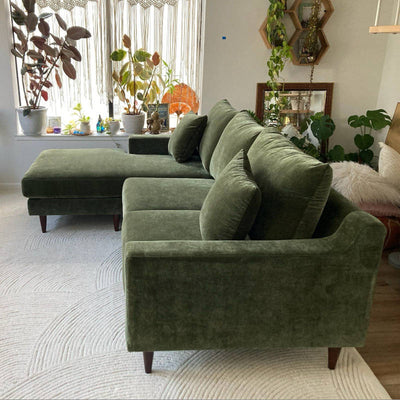
One way to think about warm colors is by looking at nature. When you look outside, the colors you see in things like tree bark, soil, leaves, and natural wood tend to fall into warmer color families. Those tones often feel comfortable because they are colors we naturally see around us.
Sometimes the existing elements in the room help guide that decision. Many homes have flooring with warmer or reddish undertones, and bringing in very cool toned fabrics can sometimes feel slightly off because the tones are working against each other.
Lighting can also change how a fabric looks in a room. Natural light, warm lighting, and cooler LED lighting can all affect how colors appear. A gray fabric might look slightly blue in one room and more neutral in another depending on the lighting.
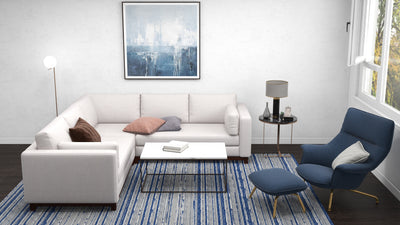
Neutral also does not mean boring. In many cases it actually gives you more flexibility when designing a room. A neutral sofa can anchor the space while allowing you to introduce color through accent chairs, rugs, throw pillows, or artwork. If you ever want to refresh the room later, it is much easier to change those smaller elements than it is to replace the sofa itself.
How Sofa Color and Scale Affect a Room
When choosing a sofa color, people usually go one of two directions. Monochromatic or contrasting. A monochromatic approach means the sofa blends with the surrounding colors in the room and creates a calm, cohesive look. A contrasting approach means the sofa stands out more and becomes a focal point. Both approaches can work well.
Scale also matters when choosing bold colors. A single chair in a bold color can act as an accent piece, while a large sectional in that same bold color will carry much more visual weight in the room.
A fabric swatch can also look very different once it covers a large piece of furniture. Colors and textures that feel subtle on a small sample can appear much stronger when they cover an entire sofa or sectional.
As a general rule, fabrics often appear about half a tone to a full tone lighter when they are applied to a large piece like a sofa or sectional compared to how they look on a small swatch. This happens because the fabric reflects more light across a larger surface.
Because of that, many people choose neutral fabrics for larger sectionals. A neutral sectional can act as an anchor in the room and allows other pieces like pillows, chairs, rugs, artwork, or throw blankets to bring in color.
Texture can also help keep a neutral sofa from feeling flat. Subtle texture or tone variation can add depth while still keeping the room balanced.
Texture can also help with everyday living. Fabrics with visible texture tend to hide things like pet hair and minor wear better than very smooth fabrics. If you have pets, this can make a noticeable difference. That said, it is also important to be realistic. If a cat is determined enough, there really is not a fabric that is completely claw proof.
Durability, Pilling, Cleanability, and Performance Fabrics
When people start comparing upholstery fabrics, a lot of confusion comes from the fact that durability, pilling, and cleanability are different things.
These three characteristics affect how a fabric performs over time, but they measure completely different things.
Durability refers to how well a fabric holds up to repeated use. Another measurement you may hear when comparing fabrics is rub count, which is a test that measures how resistant a fabric is to abrasion. Some manufacturers call it a rub count, others call it a double rub count or an abrasion count, but they are all referring to the same type of test that measures how well a fabric holds up to repeated friction. In general, once a fabric reaches around 30,000 rubs, it is considered durable enough for most residential use.
It is important to understand that rub count measures abrasion resistance, not pilling. A fabric can have a very high rub count and still pill because pilling is related to fiber construction rather than abrasion resistance. Extremely high rub counts are often designed for commercial environments like hotels, offices, or restaurants where furniture experiences constant use.
Once you start getting into the 50,000 to 100,000 rub range, the durability is already more than sufficient for a home. At that point it usually makes more sense to focus on choosing the fabric that looks and feels best rather than chasing a higher number.
Pilling refers to small fiber balls that can form on the surface of certain fabrics.
Cleanability refers to how easy the fabric is to clean when something spills.
If you want a full breakdown of pilling and what can be done about it, we go into that in more detail in our pilling guide.
Another term that often causes confusion is performance fabric.
Different companies use that term differently. In some cases it simply means the fabric is designed to be more stain resistant or easier to clean. In other cases companies use the term to describe fabrics that are both durable and stain resistant or fabrics that are marketed as pet friendly.
Because the term is used differently from one store to another it is important to understand the distinction. Many people assume that performance automatically means the fabric will not pill, but pilling is a completely separate characteristic.
A fabric can be stain resistant and still pill and a fabric that resists pilling may not necessarily be stain resistant.
Now that you understand the difference between durability, pilling, and cleanability, it can make it much easier to evaluate upholstery fabrics. Order free fabric samples and test for yourself at home.
Frequently Asked Questions
What is the most durable fabric for a sofa?
Many upholstery fabrics today are made from polyester because it holds up well to everyday use. Durability also depends on the fabric construction and abrasion rating, often referred to as rub count.
What rub count is good for a residential sofa?
In general, once a fabric reaches around 30,000 rubs, it is considered durable enough for most residential use.
Do performance fabrics pill?
Performance fabric usually refers to stain resistance or cleanability, but it does not automatically mean the fabric will not pill. Pilling is related to fiber construction and is separate from durability.
Why does a sofa look different than the fabric swatch?
Fabric swatches are very small, and colors can appear different once they cover a large surface like a sofa or sectional. Fabrics often appear slightly lighter when applied to larger furniture because the material reflects more light.


